

Support, weld joint, flange — and another support: on a pipeline the vulnerable points repeat along the whole route, and rust usually starts there, on the underside of the pipe or under insulation. DQS protects steel pipes and above-ground pipelines on pipe racks, in plant buildings and in equipment piping across Uzbekistan against corrosion: we paint new lines and repair the coating on old ones. Hot and operating lines are painted without shutdown. We do not take on underground sections or soil-to-air transitions.
Pipes run in tiers, several lines side by side, above roadways and equipment. We work from lifts, and where machinery cannot get through, certified industrial rope-access technicians go up.
New pipes are best cleaned and primed before installation, with the joints and sling-damaged spots touched up after assembly and testing.
Repair starts with a walk along the route: we mark where the coating holds and where it has flaked or rust has crept under the film — and propose spot repair or repainting of the section. We feather the edges of the remaining coating and select a material compatible with the old one.
The coating system is set by the design; without a design we select it for the medium and the line temperature. We use paint systems based on abrasion-resistant epoxy coatings.
The area is calculated from the outer surface: 3.14 × outside diameter × length. For example, one kilometre of Ø219 mm pipe is about 690 m², and that volume already qualifies for the offer: 15% off on orders from 500 m². We will apply a trial area on your pipeline free of charge before the contract is signed. We give a warranty of up to 10 years on our work.
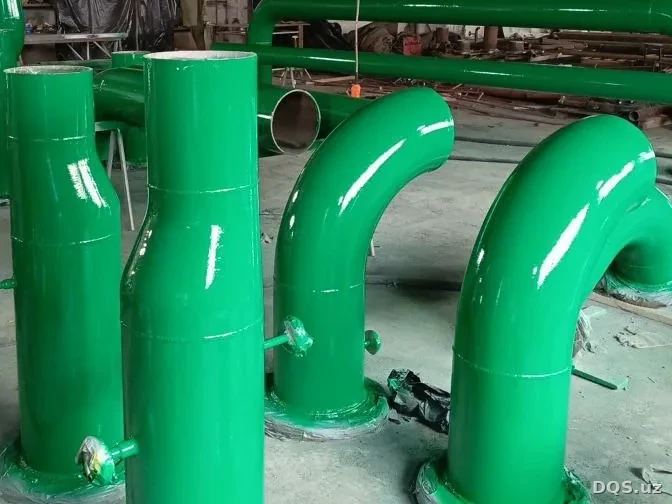
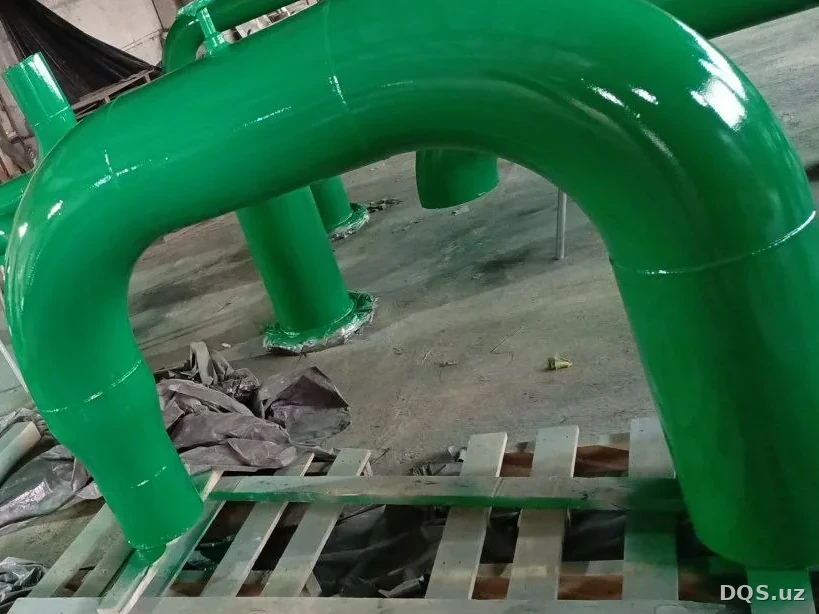
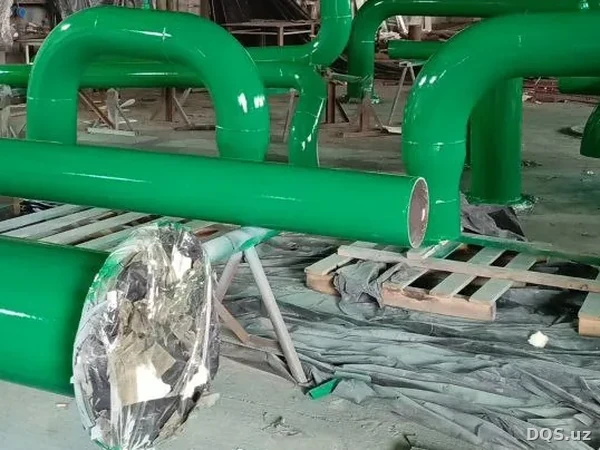
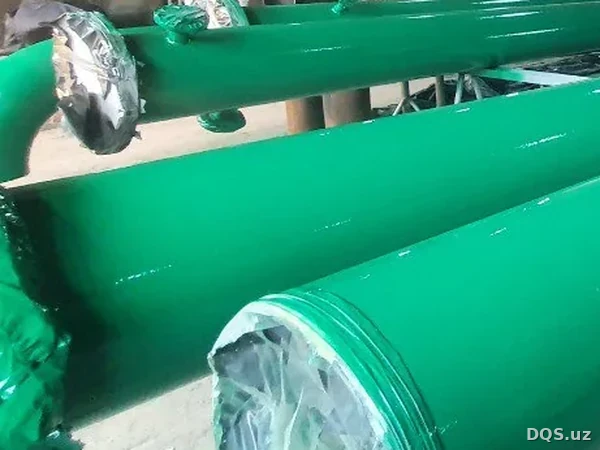
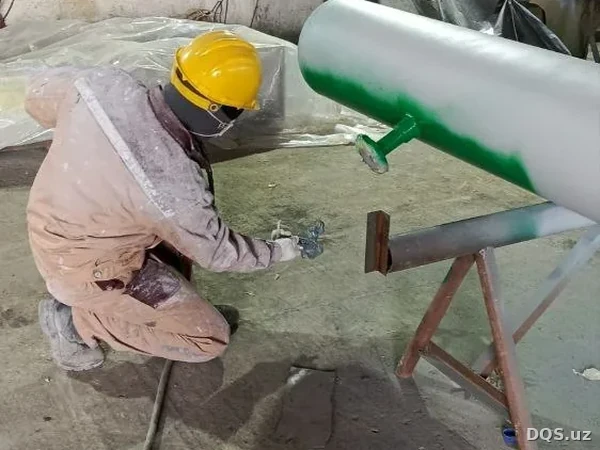
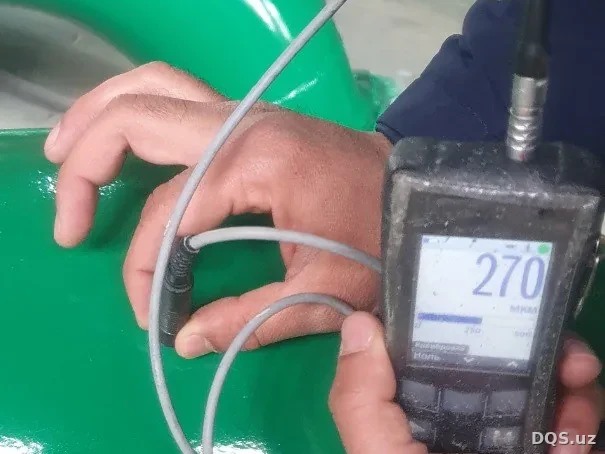
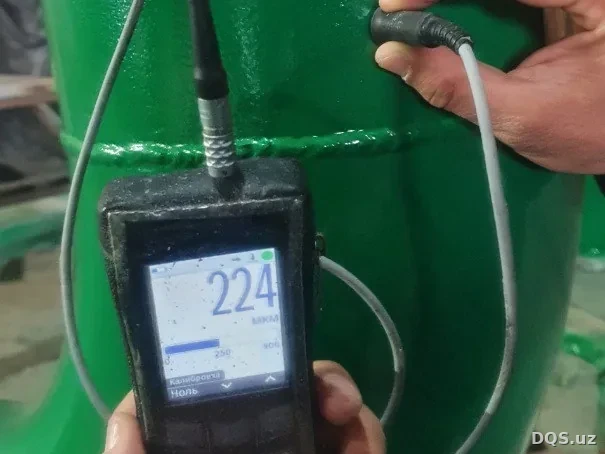
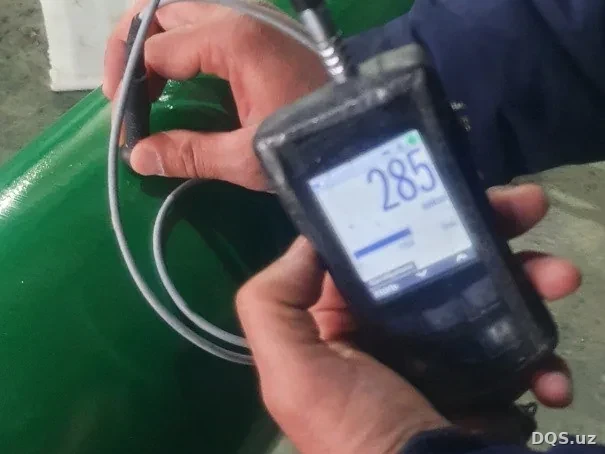
Painting of pipes and pipeline assemblies — bends, tees, flanged pipes — and dry film thickness measurement.
Send us the design or a photo of the line to contact@dqs.uz and specify the diameters, length and operating temperature — we will convert linear metres into square metres and quote a price. Phone: +998 90 978 10 00.
See also: Anti-corrosion protection · Sandblasting · Polyurea waterproofing
