

Fire protection for air ducts

Preventing fire and smoke spread during emergencies

Fire protection for air ducts is a mandatory fire safety requirement for buildings and structures.
✔ It prevents flames from spreading via ventilation.
✔ It slows heat transfer and protects structures from overheating
✔ It maintains smoke extraction functionality
✔ It minimizes the concentration of hazardous carbon monoxide during emergencies.

Regulatory document:
SP 7.13130 (fire resistance limit EI 15–EI 150 depending on the ventilation type and smoke removal calculation).
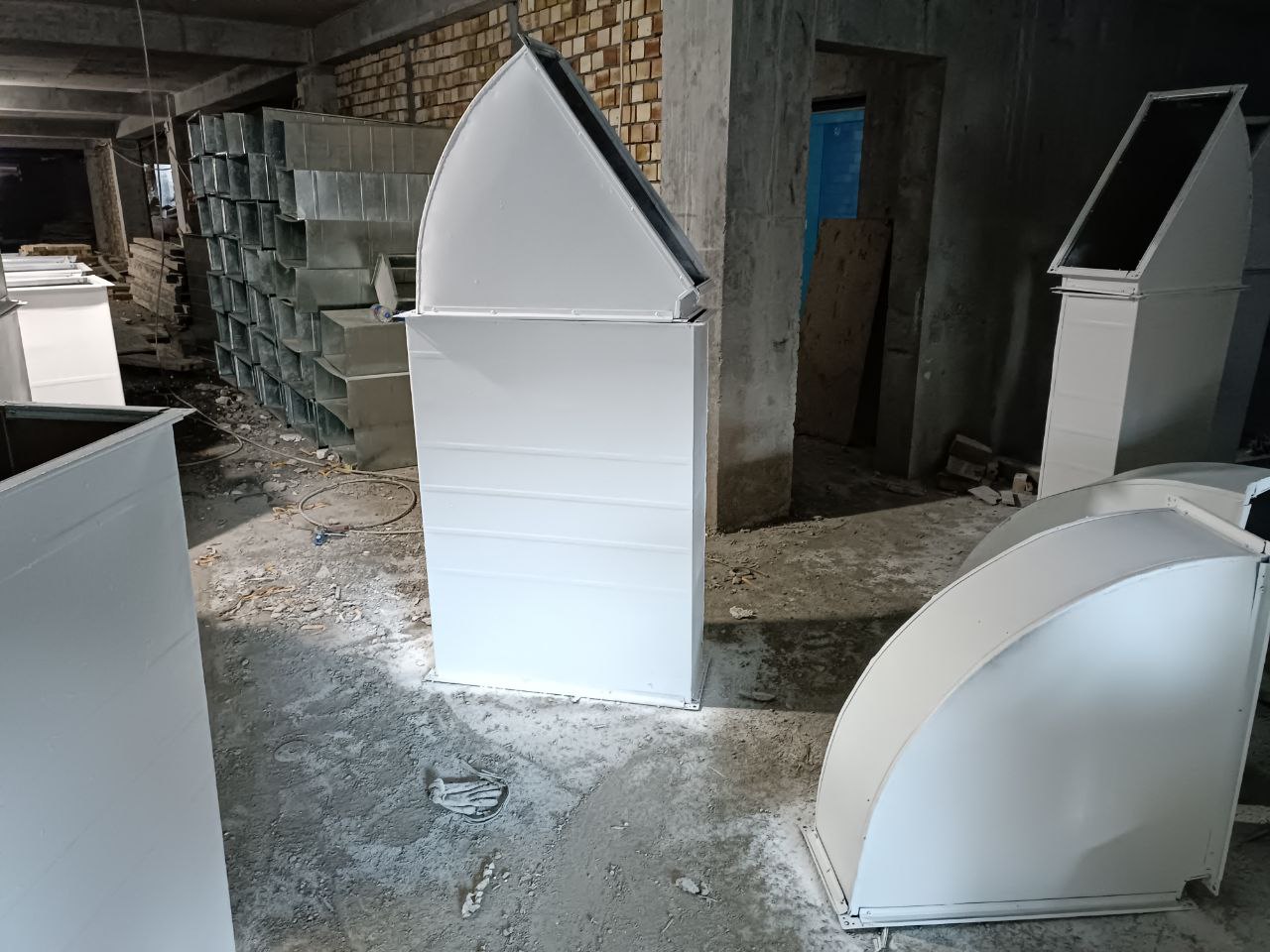
обработка воздуховодов огнезащитой

Fireproofing Treatment Methods for Air Ducts

  1. Thermal insulation materials
  • Basalt mats and foil-clad sheets
  • Self-adhesive fire-resistant sheets
  • Advantages:high-temperature resistance
  1. Thick-film compounds
  • Fire-resistant plasters and mastics
  • Mineral wool coatings (slabs, mats)
  • Advantages:high protection (up to EI 150)
  1. Thin-film fire-resistant paints
  • When exposed to fire intumescent paints form a fire-insulating layer
  • Advantages:simple application, rapid installation, suitable for complex configurations
  1. Combined systems
  • Integration of thermal insulation, soundproofing, and thick-film materials
  • Advantages:maximum efficiency

Duct fire protection costs

The final price is determined by several key factors:
✅   Material type (paint, plaster, basalt mats)

✅   Required fire resistance rating (EI 15, 30, 60, 90, 120, 150)

✅   Installation complexity (curved ductwork or work at height)

✅   Area coverage (price decreases for larger areas)

Why entrust fireproofing to professionals?

  • Complex duct geometry requires precise application across the entire surface of ductwork.
  • Inaccurate application reduces the fire resistance of the system and the building's fire safety
  • Improper procedures can cause coating peeling and defects, leading to disastrous consequences during an emergency.

Our strengths:

✔ Ministry of Emergency Situations fire protection license

✔ Certified materials only

SP 7.13130 standards compliance guarantee

How we do the work

  1. Survey. We look at the material and wall thickness of the ducts, their cross-sections, fixings and hangers, penetrations through walls and floors, and access to routes at height.
  2. Calculation. Based on the design and the required fire resistance rating we calculate the scope of work and material consumption, and agree a schedule if the facility is in operation.
  3. Surface preparation. We clean and degrease the steel. Galvanized steel is additionally primed — without this the fire protection compound adheres poorly to zinc.
  4. Application. We treat the duct around the full perimeter of its cross-section, including fittings, flanges and penetration details through enclosing structures.
  5. Inspection and handover. We measure the coating thickness with DeFelsko gauges and hand over reports and as-built documentation for acceptance.

We protect the fixings too

If hangers and brackets are left unprotected, in a fire they lose strength before the duct itself — and the duct falls even if it was coated by the book. That is why we treat the fixings together with the duct.

Free trial area

We will treat a trial section of duct on your site free of charge — you can assess the result before signing the contract.

Over 20 years of experience, our own crews and lifting equipment for work at height, ISO 9001 and ISO 45001 certified. We work across Uzbekistan.

See also: Cable fire protection · Firestop sealing of penetrations

Contact

    English
    Telegram
    DQS work geography across Uzbekistan